
Leave Your Message
The industrial landscape in the Russian Federation has undergone significant transformations over the past decade, placing a profound emphasis on localization, import substitution, and securing robust supply chains. Within the realm of food additives, pharmaceutical excipients, and industrial stabilizers, the Microcrystalline Cellulose (MCC) Functional Series has emerged as a critical component. As leading manufacturers and factories in Russia adapt to new economic realities, the demand for high-quality, technologically advanced MCC products has skyrocketed. Cities like Moscow, St. Petersburg, Yekaterinburg, and Novosibirsk are currently witnessing a surge in processing facilities that require premium functional ingredients to maintain product quality under stringent Eurasian Economic Union (EAEU) standards.
Historically reliant on Western European suppliers, Russian factories are now diversifying their procurement strategies. There is a massive shift towards establishing partnerships with advanced Asian manufacturers, such as TELLCAN SCIENCE, who offer superior Microcrystalline Cellulose Functional Series. This transition is not merely about replacing suppliers; it is an upgrade in technological capabilities, allowing Russian food and pharma industries to achieve better stability, texture, and shelf-life in their end products.
The Ural and Volga regions are becoming epicenters for food processing and pharmaceutical manufacturing. These factories require MCC that can withstand rigorous processing conditions. The functional series acts as an exceptional anti-caking agent, emulsifier, and texture modifier. With local governments incentivizing domestic production of end-consumer goods, the B2B demand for raw functional materials like MCC has reached unprecedented levels in the Russian Federation.
Understanding the specific needs of the Russian consumer market is paramount for any MCC manufacturer. The climate, traditional diet, and evolving consumer preferences in Russia create unique application scenarios for the Microcrystalline Cellulose Functional Series. By integrating advanced AI-driven formulation technologies, these functional series are perfectly tailored for local industries.
Dairy is a cornerstone of the Russian diet. Traditional fermented products like Kefir (fermented milk drink), Smetana (sour cream), and Tvorog (cottage cheese) require specific textural properties. MCC functional series are widely utilized by Russian dairy factories as premium stabilizers. They prevent syneresis (whey separation) in Smetana, improve the mouthfeel of low-fat Kefir, and provide structural integrity to processed cheese spreads. In a country where dairy products must often endure long transportation routes across vast freezing terrains, the thermal and freeze-thaw stability provided by MCC is indispensable.
Russia has a massive meat processing industry, famous for products like Kolbasa (sausages) and Pelmeni (meat dumplings). Microcrystalline Cellulose is heavily integrated into the recipes of these factories. It acts as a highly effective fat replacer and moisture binder. By utilizing MCC, Russian meat factories can produce healthier, reduced-fat sausages without compromising the traditional juicy texture. Furthermore, in the production of frozen Pelmeni, MCC helps maintain the integrity of the dough during the freezing and boiling processes, preventing cracking and ensuring a perfect culinary experience.
Under the Russian government's "Pharma 2030" strategy, there is a massive push to localize the production of essential medicines. Microcrystalline Cellulose is the gold standard excipient for tablet binding and direct compression. Factories in the Moscow region and St. Petersburg are utilizing MCC functional series to manufacture high-quality generic drugs, vitamins, and dietary supplements. Its superior compressibility, flowability, and inert nature make it the backbone of solid dosage forms in the rapidly expanding Russian pharmaceutical landscape.
The extreme cold of Russian winters demands robust skincare solutions. Cosmetic factories in Russia utilize MCC as an emulsion stabilizer and sensory enhancer in heavy winter creams, lotions, and balms. It provides a luxurious, non-greasy feel while ensuring that the active moisturizing ingredients remain perfectly dispersed, even when exposed to severe temperature fluctuations.
The future of Microcrystalline Cellulose manufacturing and its application in Russia is deeply intertwined with technological advancements and sustainable practices. As the industry evolves, several key trends are shaping the operations of manufacturers and factories across the Eurasian continent.
Artificial Intelligence is revolutionizing how food scientists develop compound additives. By utilizing AI algorithms, manufacturers can predict the exact rheological behavior of MCC in complex matrices like Russian rye bread or dairy emulsions. This tech-driven approach significantly reduces R&D time for Russian factories, ensuring faster time-to-market for new products.
Eco-conscious production is becoming a regulatory requirement. Modern MCC factories are adopting closed-loop water systems and utilizing sustainable raw materials. For Russian buyers, partnering with environmentally responsible manufacturers ensures compliance with emerging ecological standards within the EAEU.
The strategic partnership between China and Russia has streamlined logistics and cross-border trade. High-tech enterprises like TELLCAN SCIENCE are perfectly positioned to supply the Russian market efficiently. Enhanced rail networks and simplified customs procedures mean that Russian factories receive their MCC functional series faster and more reliably than ever before.
Nanchang Tellcan food Science Co., Ltd (hereinafter referred to as Tellcan Food), founded in 2001, is an excellent practitioner of compound food additives and food essence, specializing in the research and development, production and sales of food additives, and the research and development of food technology and food technology. Various types of compound food additives, edible essence and spices produced by Tellcan Food can be used in many fields such as food, beverage and dairy products.
Read moreEmpowering the Microcrystalline Cellulose Functional Series with cutting-edge technology and rigorous testing.


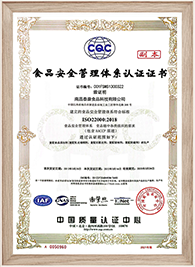
The company has implemented and maintains the HACCP 22000 Food Safety Management System, ensuring reliable products and services. To date, Tellcan has resolved technical challenges for thousands of domestic enterprises and earned prestigious recognitions, including:
 Council Member of China Food Additives Production and Application Industry Association Standing Council Member of Jiangxi Food Additives Association Member of China Dairy Products Industry Association Member of China Bakery & Confectionery Supplementary Materials Industry Association Member of China National Federation of Industry & Commerce Bakery Association Premium Products & Global Sourcing



Trusted by leading brands and factories globally.


 Composite Sweetener Series
 Microcrystalline Cellulose Functional Series
 Composite Antioxidant Series
 Composite Preservative Series
